On this page 6 sections
When people compare uncoated vs coated art print papers, they are really choosing between a smooth, bright surface that keeps colour crisp and a matt, natural surface with gentle texture. Our two papers sit on either side of that choice: 300gsm Premium Smooth White and 350gsm Recycled Uncoated, both in A5, A4 and A3.
Paper changes how a print looks and feels more than most people expect. The same artwork can look sharp and vivid on one sheet and soft and painterly on another. This guide explains how our two papers differ and which kinds of work each one flatters. If you are new to art prints, start with our guide to art prints on paper, and if you are weighing paper against canvas, see our comparison of canvas or poster.
The 300gsm smooth white paper
The 300gsm Premium Smooth White is a bright, smooth sheet. Ink sits close to the surface, so fine lines stay crisp, flat areas of colour look even and photos keep their detail.
It is the choice for digital illustration, graphic design, photography, typography with fine serifs and anything with strong, saturated colour. Bright white also gives the cleanest whites in an image, which matters for designs with a lot of white space.
Both papers are available on our heavyweight art prints page, where you can order from one print up to 25.
The 350gsm recycled uncoated paper
The 350gsm Recycled Uncoated is thicker, with a matt surface, a gentle texture and no sheen. Uncoated paper absorbs ink a little more into its fibres, which softens edges very slightly and gives colours a calmer, more natural feel.
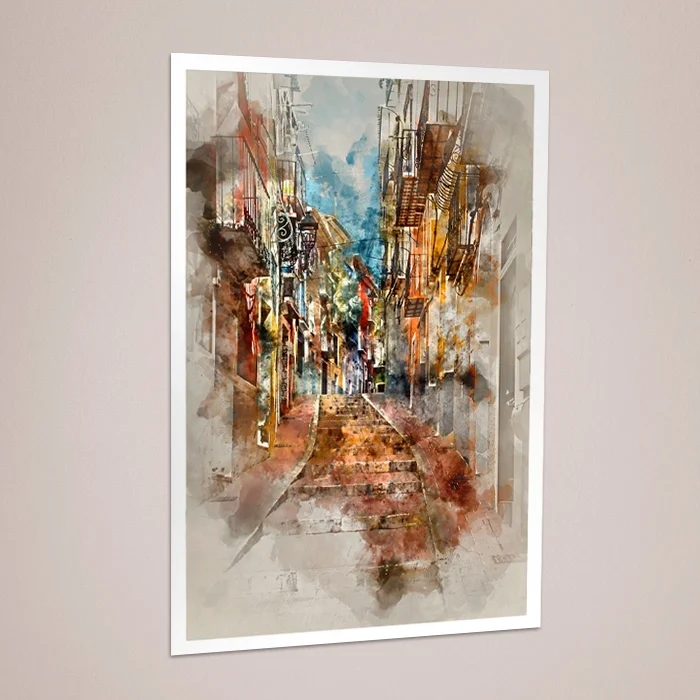
It flatters watercolour, gouache, pencil, charcoal, ink, lino-cut styles and anything that was made by hand on paper in the first place. The texture and weight give the print a feel closer to an original, which many painters and illustrators value when they sell reproductions. Being recycled is also a plus for buyers who care about materials.
Colour and detail on each
| 300gsm Smooth White | 350gsm Recycled Uncoated | |
|---|---|---|
| Colour | Bright and saturated | Softer, more muted |
| Fine detail | Very crisp | Slightly softer |
| Darks | Deeper | A little lighter |
| Surface | Smooth | Matt with a gentle texture |
If your artwork has deep, rich blacks or very fine line work, smooth white keeps them strongest. If it has soft washes and natural tones, the recycled sheet often looks closer to the original.
Adjusting files for uncoated paper
Because uncoated paper softens colour and darks slightly, some artists lift the shadows and add a touch of contrast to files destined for it. Make a small test print first to judge how much, if any, adjustment your work needs.
How each paper ages in a frame
Both sheets are heavy enough not to ripple behind glass. Whichever you choose, the usual framing advice applies: use a mount so the print does not touch the glass, keep it out of long hours of direct sun, and avoid damp walls. Uncoated paper is a little more absorbent, so it is worth keeping it away from steamy kitchens and bathrooms in particular.
Feel and weight
Both papers are heavy enough to feel substantial in the hand and to sit flat in a frame. The 350gsm sheet is the thicker and stiffer of the two, with a card-like feel that buyers notice when they pick a print out of a browser box.
Weight also helps when prints are posted, handled at markets or kept unframed in a portfolio. A heavier sheet resists bending and creasing. Our wall art prints use the same two papers in the same sizes for photos and personal pieces at home.
What buyers notice
At a market stall or in a gallery shop, buyers usually touch a print before they look closely at it. The smooth sheet feels clean and precise, which suits modern graphic work. The recycled sheet feels soft and slightly toothy under the fingers, which people often read as handmade and special. Neither is better; they suit different work and different buyers.
Which suits your work
- Choose smooth white for digital art, photography, bright colour, typography and fine detail.
- Choose recycled uncoated for watercolour, pencil, ink, printmaking styles and calm, natural images.
- Not sure? Order one print of the same design on each paper and compare them side by side in daylight.
Photographers have a choice too. Most colour photos suit the smooth white, but quiet black and white work, foggy landscapes and film-style images can look lovely on the recycled sheet, where the matt surface gives them a softer, printed-book feel.
Many artists stock both papers, matching each design to the sheet that flatters it. For pieces that need to be bigger than A3 or hang without a frame, our canvas prints go up to 60 × 90 cm. Saver production for paper prints is 5 working days, prices show live on each page, and every format is in our canvas and wall art range.
Questions
Which paper is thicker?
The 350gsm Recycled Uncoated is the heavier, stiffer sheet. The 300gsm Smooth White is still a heavyweight paper that sits flat in a frame.
Which paper is best for watercolour prints?
The 350gsm Recycled Uncoated. Its matt, lightly textured surface suits painted originals.
Which paper shows colour most brightly?
The 300gsm Premium Smooth White keeps colour bright and saturated and detail crisp.
Can I test both papers?
Yes. Order a single print on each paper and compare them before ordering a larger run.
Do both papers fit standard frames?
Yes. Both come in A5, A4 and A3, which fit ready-made frames and mounts.